Spec sheet · Takshan-EPT · AI education
Give teachers a head start on lessons and assessment.
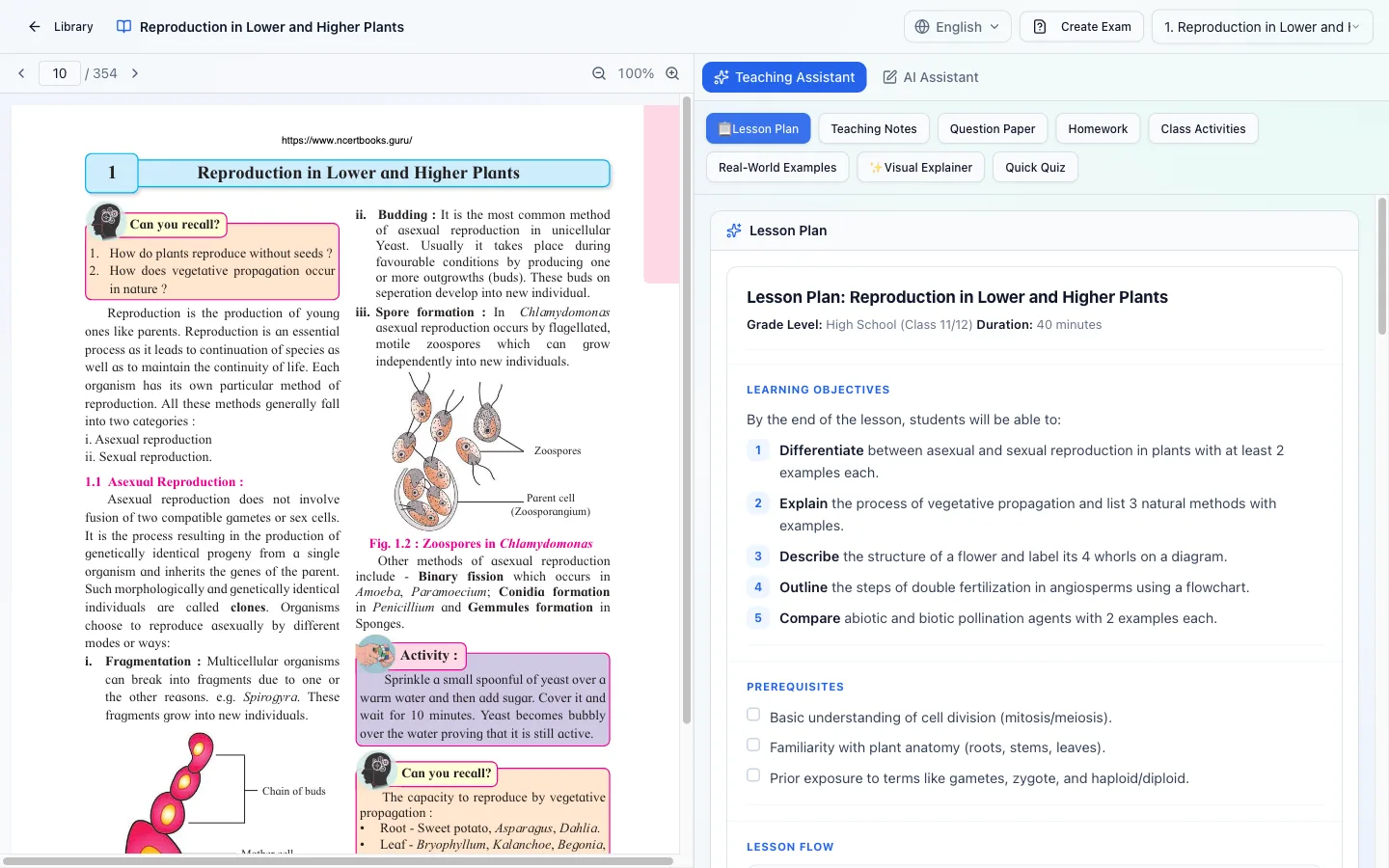
Teachers generate editable lesson material from the selected textbook chapter. Students use study tools and a tutor that retrieves content from the same chapter. Teachers review and sign off assessments before results reach the student record.
- Designation
- Takshan-EPT
- Class
- AI education
- Status
- Flagship
- Drawing
- Sheet 03
- Next step
- Product demonstration
The platform layer · Flagship
Takshan-EPT combines teaching, study and assessment tools in one platform. Implementation includes sizing the deployment for your institution and reviewing curriculum, access and data requirements.
Three seats at one chapter
- 01The teacher
Generate eight types of teaching material from the selected chapter, then review and edit the drafts.
- 02The student
Use nine study tools and a tutor that retrieves material from the selected chapter. Explore the tutor and test its responses during the demo.
- 03The institution
Review class analytics to identify chapters that need more attention. Maintain teacher appraisal records for career advancement under UGC norms.
The loop
Keep teachers in control of assessment.
Build papers from the question bank, review marked scripts and approve results before they enter the student record.
Takshan-LM
Run the language model within your institution.
Takshan-EPT can use a language model deployed inside the institution’s POD. Takshan-LM is based on Sarvam-M under Apache 2.0 and tuned on curriculum content used with permission. This deployment keeps tutor inference and student interactions within the institution. Ask to see the local-model configuration in your demo.
Languages
Teaching and study tools are available in seven languages.
Deployment capacity
A POD is a self-contained deployment unit sized for 200 concurrent users; three PODs support 600. These are infrastructure specifications. Hardware and storage details are available on the Takshan-EPT engineering page at synaptron.ai.
Deployment considerations
Chapter-based retrieval helps constrain tutor responses, which can still contain incorrect answers. We publish no tutor or local-model benchmark. Review student-data handling and residency for your chosen deployment during the session. Capacity figures describe infrastructure sizing, not current enrolment or adoption.

Try the teaching and assessment workflow.
Explore the teacher, student and institution views with an engineer in a 30-minute demonstration.
Book a product demo